What Second-Generation Overseas Koreans Must Know Before Applying for an F-4 Visa


Today I would like to clearly explain the key points that second-generation overseas Koreans must check before applying for an F-4 visa, along with the essential preparation steps for the application.
The most important step is to accurately confirm eligibility.
Because the F-4 visa can be issued to second- and third-generation overseas Koreans, you must first determine whether the applicant qualifies as a second-generation overseas Korean under the law.
To do this, you need to confirm whether both parents were foreign citizens at the time of the child’s birth, or whether one parent still held Korean nationality at that time.
For example, if both parents were U.S. citizens when the child was born, the child is considered an American citizen, not a Korean national.
In this case, there is no issue applying for an F-4 visa as a second-generation overseas Korean.
Complications arise when one or both parents held Korean nationality at the time of the child’s birth.
In such cases, the child becomes a dual citizen by birth, holding both Korean and U.S. nationality. This happens because Korea follows jus sanguinis (citizenship by blood), while the United States follows jus soli (citizenship by birthplace).
Dual citizens by birth are required to choose their nationality before turning 22.
The rules differ for men and women.
✅ Female Applicants
For women, if nationality is chosen before age 22 and a pledge not to exercise foreign nationality in Korea is submitted, dual citizenship may be maintained.
Even if the deadline has passed, it is still possible to acquire overseas Korean status and apply for an F-4 visa later through a nationality renunciation report.
✅ Male Applicants
The situation is different for men.
If a male dual citizen by birth does not plan to fulfill military service, he must renounce Korean nationality by March 31 of the year he turns 18.
If this deadline is missed, nationality renunciation is not possible until age 37 without completing military service.
Because nationality selection and renunciation rules are complex, I will explain them again in detail in a separate video.
If anything is unclear, please leave a comment or inquiry.
let’s go over the required documents for applying for an F-4 visa.
There are three key documents you should remember:
✅ The criminal background check must be issued within the past six months and must be submitted with an apostille.

✅ The birth certificate is required to prove the parent-child relationship and must also be submitted with an apostille.
However, if the document is issued by your home country’s embassy in Korea, the apostille requirement may be waived.
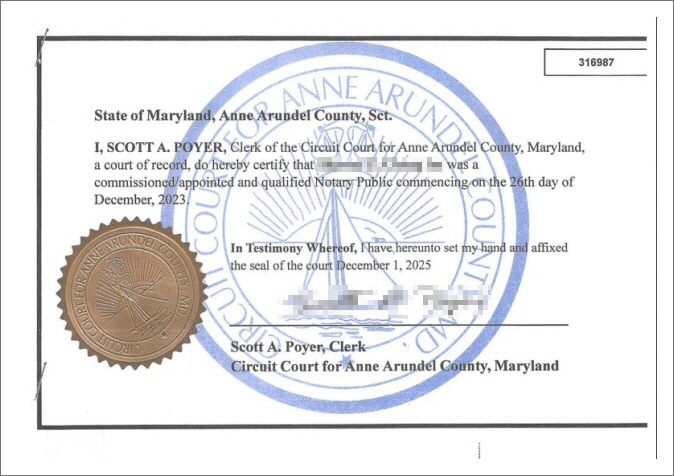
An apostille is a certification that allows a document issued in one country to be legally recognized in another country.
✅ If you enter Korea without an apostilled document, domestic processing through an agency is possible, but it takes significantly longer. Therefore, preparing these documents in advance is strongly recommended.
First-generation overseas Koreans who previously held Korean nationality are exempt from Korean language requirements.
However, second-generation overseas Koreans must demonstrate a certain level of Korean proficiency.
Acceptable documents include one of the following:
If you are required to submit proof of Korean proficiency but fail to do so, the visa issued will limit your stay to one year or less.
Because annual extensions can be inconvenient, I personally recommend completing the Social Integration Program pre-evaluation.

Additional required documents include:
Most of these documents are relatively easy to prepare.
You may apply for an F-4 visa either through a Korean overseas diplomatic mission or within Korea, depending on your situation and convenience.
Finally, second-generation overseas Koreans should also check the scope of permitted employment after obtaining an F-4 visa.
Although the F-4 visa allows relatively free economic activity, simple labor jobs are restricted.
Examples of prohibited employment include:
Engaging in these activities is considered illegal employment.
If you plan to work in Korea, please be sure to review these restrictions carefully to avoid any disadvantages.


.png)
.jpg)