How to Register Paternity and Obtain Korean Nationality


In recent years, global attitudes toward marriage have changed significantly. Many couples choose to live together without holding a formal wedding or registering their marriage. As a result, there are increasing cases where couples have children before marriage.
When this happens, many parents are unsure about how to register the child administratively and how the child can acquire nationality. For those who are facing this situation, I prepared this guide to explain the process clearly. Let’s begin.
“What if a child is conceived before any registration? What should we do if the mother is already pregnant?”
If the mother is still pregnant, the simplest option is to file a fetal paternity acknowledgment in Korea.
The procedure for fetal acknowledgment is relatively straightforward. You can prepare the required documents and submit the application at the district office.
Once the child is born, the process becomes more complex, so it is strongly recommended to complete the fetal acknowledgment before birth whenever possible.
“What if the child has already been born?”
In international relationships, one parent is typically Korean and the other is a foreign national.
For example, if the father is Korean and the mother is a Russian national, and the parents are not legally married at the time of birth, the child is initially considered a Russian national.
In this case, the first step after birth is to visit the Russian Embassy to register the child’s birth and obtain a passport.
After completing this step, there are two procedures that must be handled promptly:
1) Apply for the child’s stay status at the Immigration Office
2) File a paternity acknowledgment
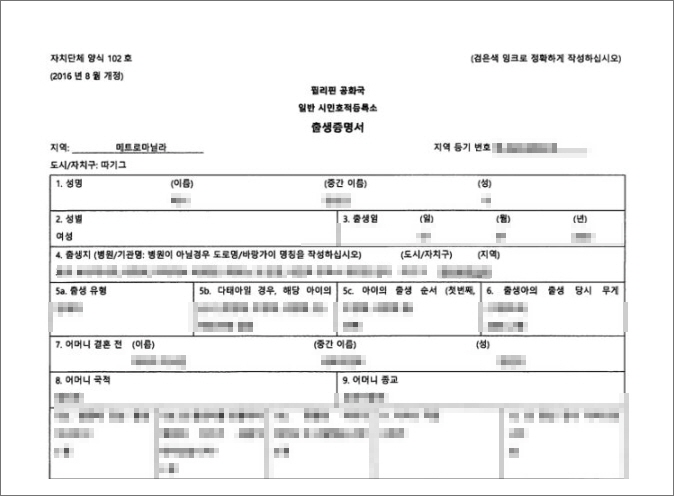
Through the paternity acknowledgment, the Korean father legally confirms that the child is his. Once this is completed, the child can be registered in the Family Relationship Register.
However, registration in the Family Relationship Register does not automatically grant Korean nationality. Korean nationality is acquired only after completing a separate nationality acquisition process. This sequence—birth registration, paternity acknowledgment, family registration, and nationality acquisition—represents the standard procedure.
👉“Do we need to register the marriage first in order to file a paternity acknowledgment?”
No.
Even without marriage registration, paternity acknowledgment is still possible. While many couples choose to register their marriage first and then file the acknowledgment, it is also legally possible to acknowledge the child without marriage registration and register the child separately as a family member.
👉“What about a child born to a Korean mother and a foreign father? Is paternity acknowledgment still required?”
This case is much simpler.
If the mother is Korean, once the child is born, the hospital issues a birth certificate. With this document, the child can acquire Korean nationality immediately, without additional procedures.
For children born out of wedlock in international relationships, it is helpful to remember this general rule:
The child typically follows the mother’s nationality, which significantly simplifies the process when the mother is Korean.
Marriage and family structures are evolving worldwide.
While formal marriage remains common in Korea, many countries recognize cohabitation and de facto relationships. As a result, more couples are facing questions about how to handle administrative matters when a child is born before marriage.
In this article, I explained the most commonly asked questions regarding birth registration, paternity acknowledgment, and the basic procedures for nationality acquisition.


.png)
.jpg)